Aligning Tender Pricing Assumptions with Contract Delivery Realities
Published 11/11/2026
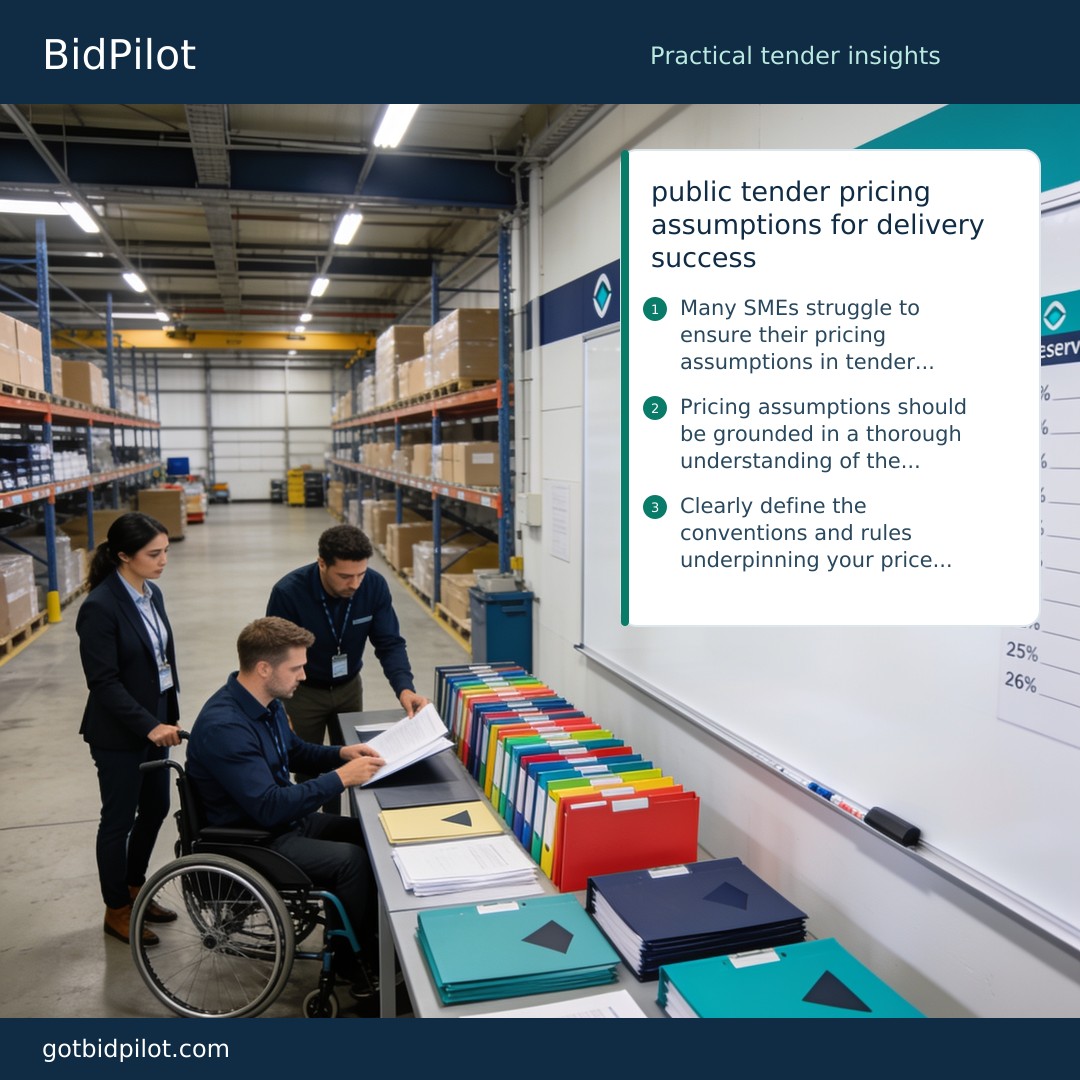
Many SMEs struggle to ensure their pricing assumptions in tender submissions accurately reflect the actual costs and complexities of contract delivery. This can lead to financial strain or disputes post-award. Making these assumptions transparent and realistic is key to securing successful contract outcomes.
Understand the Buyer's Context
Pricing assumptions should be grounded in a thorough understanding of the buyer's operational context and tender requirements. This involves researching how the buyer operates and what metrics are important to them, not just calculating internal costs Red Team Consulting.
Document and Justify Your Figures
Clearly define the conventions and rules underpinning your price estimates. Include a dedicated section in your proposal detailing all pricing assumptions, such as assumed volumes, timelines, resource availability, or buyer involvement. Provide clear justifications for each, linking them back to tender requirements or market data, and ensure supporting documentation is available Red Team Consulting. Making important assumptions visible helps avoid pricing one version of a project while the client believes all versions have been priced LinkedIn.
Establish a Feedback Loop
Continuous variance analysis is essential to quickly identify when real-world performance deviates from modelled expectations. A closed feedback loop is needed so that actual contract outcomes inform future pre-deal modelling and negotiation strategies Anaplan.
Streamline your tender analysis and bid drafting to ensure your pricing assumptions are robust. Explore BidPilot at gotbidpilot.com.
Product links
Research sources
- Remember Your Customer When Developing Pricing Assumptions
- Contract Pricing Reference Guide
- From Deal Assumptions to Revenue Reality: Rethinking Pharma Contract Performance | Anaplan Blog
- Subpart 15.4 - Contract Pricing
- 2 Purchase Planning - About USPS Home
- Avoid Assumption-Driven Pricing in Proposals | Ian Motley posted on the topic | LinkedIn